
When importers search for a hand tools factory in China, it is easy to compare catalog photos and unit prices first. But serious B2B buyers need to check more than product pictures. A reliable factory should show production capability, sample control, quality inspection, packaging handling, certificates, and clear communication before bulk orders.
China remains a major manufacturing base. World Bank data reports China’s manufacturing value added at about USD 4.66 trillion in 2024. For buyers, that scale creates many supplier choices, but it also makes factory verification more important: a trading catalog, an assembly workshop, and a real OEM-capable factory are not the same thing.
This checklist helps importers, wholesalers, distributors, hardware store buyers, and private-label brands evaluate a factory before sending a serious RFQ.
1. Check whether the factory has real production capability
A hand tool supplier should be able to explain how products are made, not only send product photos. For tape measures, utility knives, and screwdriver sets, buyers should ask about molds, injection molding, assembly, component sourcing, packaging, and inspection.
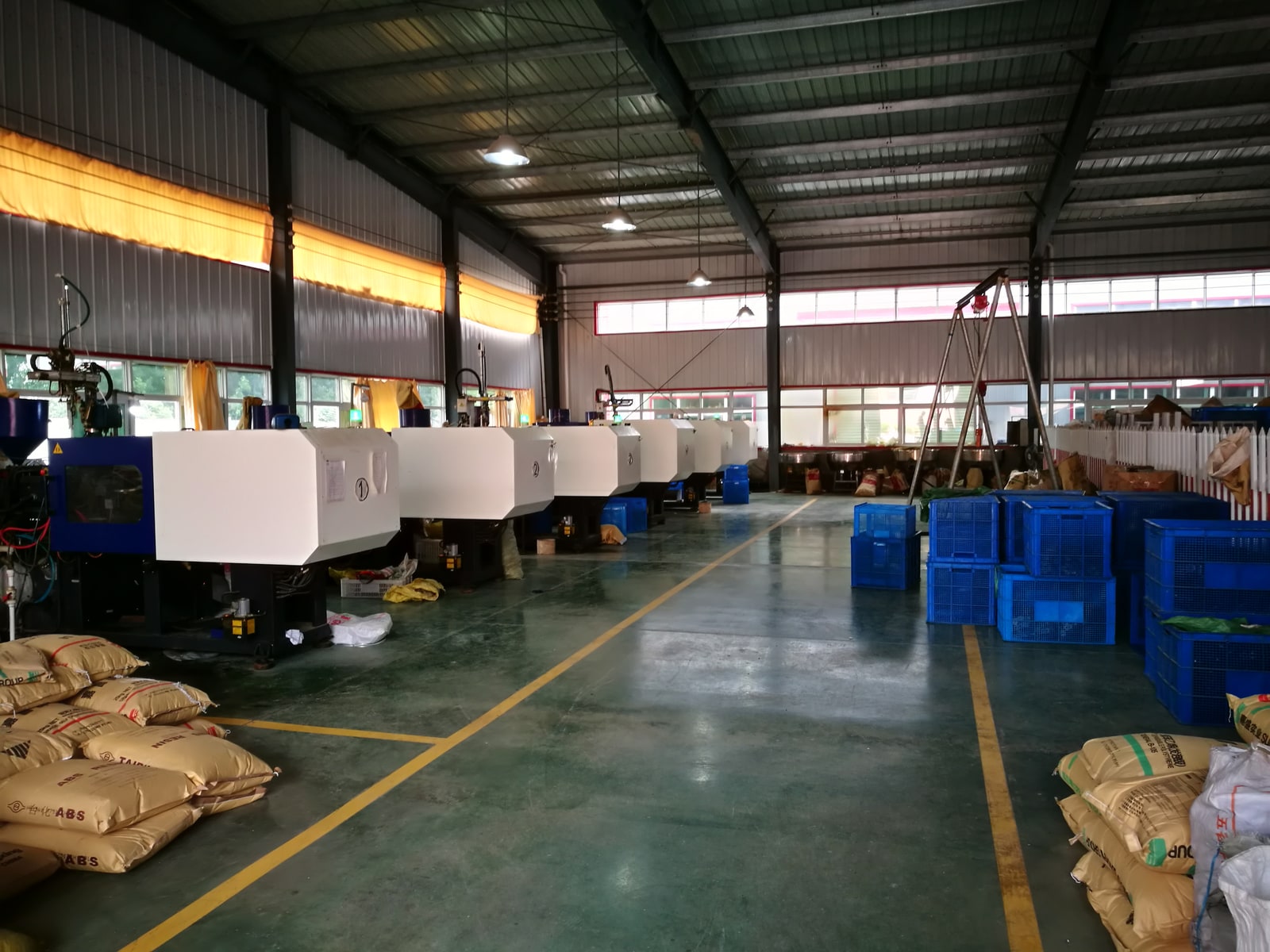
Injection molding capability helps buyers develop custom shells, colors, and selected OEM hand tool parts.
Important questions:
- Does the supplier control any production steps directly?
- Can the factory support existing models and custom development?
- Are molds, shells, handles, clips, hooks, blades, or cases managed clearly?
- Can the supplier explain which parts are standard and which need new tooling?
- Can the supplier show real workshop, assembly, QC, and packing photos?
For WOOKTOOL, buyers can review the hand tools factory page for injection molding, assembly, custom mold, QC, testing, and packing photos.
2. Review assembly and repeat-order stability
For hand tools, assembly consistency affects complaints and repeat orders. A sample can look good, but bulk production still needs stable assembly and packaging control.
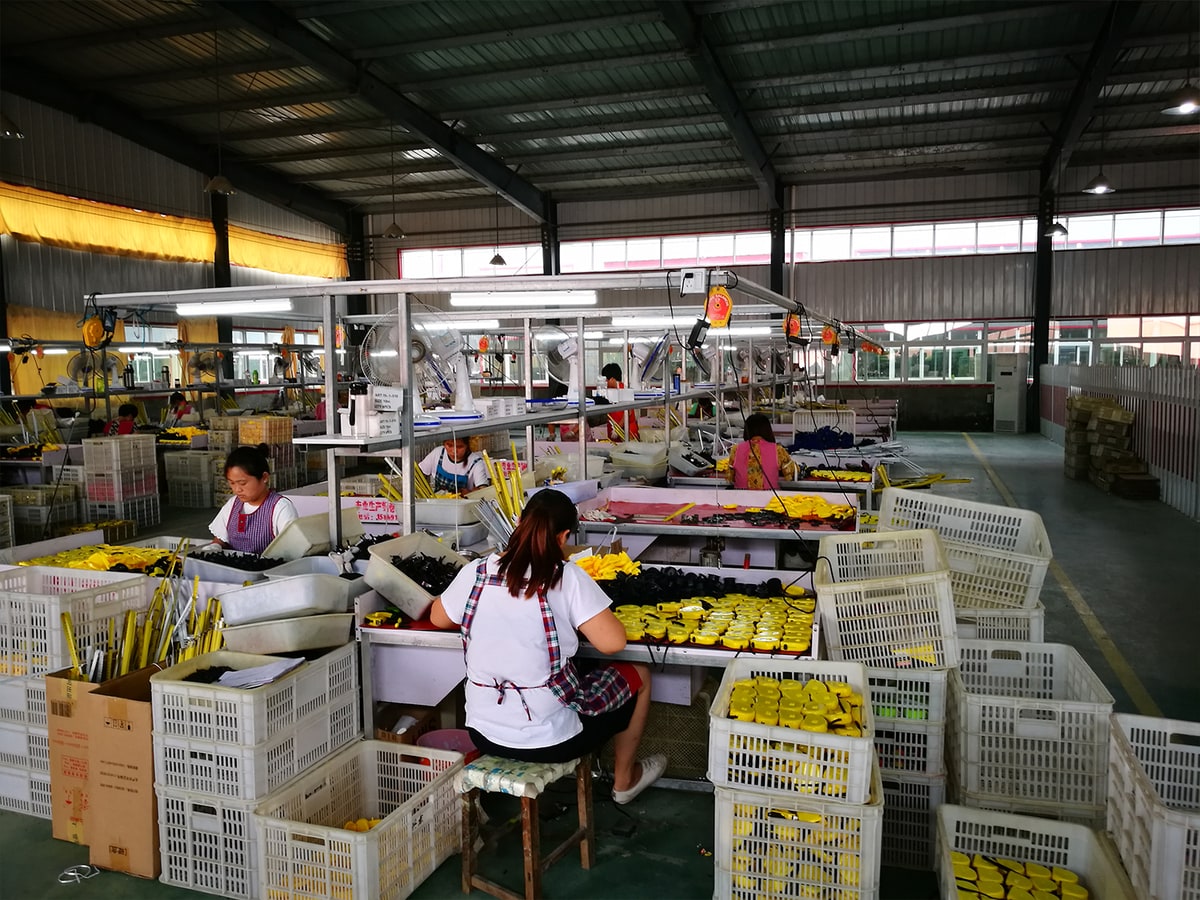
Assembly lines should support repeatable product checks, not only one-time sample approval.
Buyers should check:
- Whether the factory has regular assembly workflow
- Whether workers follow a repeatable process
- Whether key components are organized before production
- Whether product quantity and packaging quantity are checked
- Whether the supplier can keep product appearance consistent across repeat orders
For tape measures, this means blade printing, hook assembly, lock function, belt clip, strap, shell appearance, and packaging should stay consistent. For utility knives, blade fit, lock movement, handle assembly, and safety structure should be checked. For screwdriver sets, missing bits, case layout, magnetic tips, and handle finish need attention.
3. Ask about quality-control checkpoints
A factory should be able to explain what it checks before shipment. Quality control does not need to sound complicated, but it must be practical and repeatable.
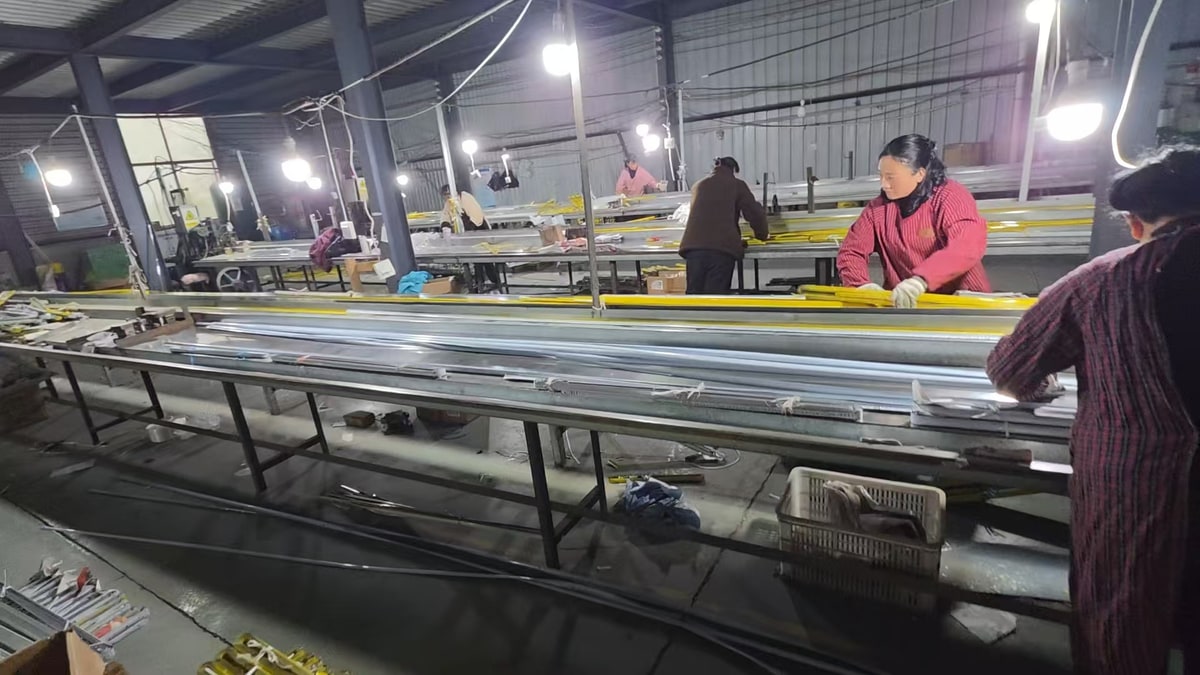
Quality inspection should cover function, appearance, assembly, packaging, and buyer-specific requirements.
Useful inspection stages include:
| Stage | What buyers should ask |
|---|---|
| Material check | Are key materials, components, color, surface, and parts checked before production? |
| Process inspection | Are assembly, printing, function, and packaging reviewed during production? |
| Finished product inspection | Are appearance, size, function, movement, lock, blade, bit, or hook details checked? |
| Packaging inspection | Are barcode labels, carton marks, retail packaging, and quantity checked? |
| Pre-shipment check | Are carton condition, order quantity, photos, and buyer-specific requirements confirmed? |
Buyers can use the WOOKTOOL quality control page to understand common hand tool inspection points before confirming an order.
4. Verify packaging and shipment handling
Packaging is where many export orders lose time. If barcode labels, carton marks, retail packaging, or carton quantity are wrong, the buyer may face relabeling costs, warehouse delays, or retail launch problems.
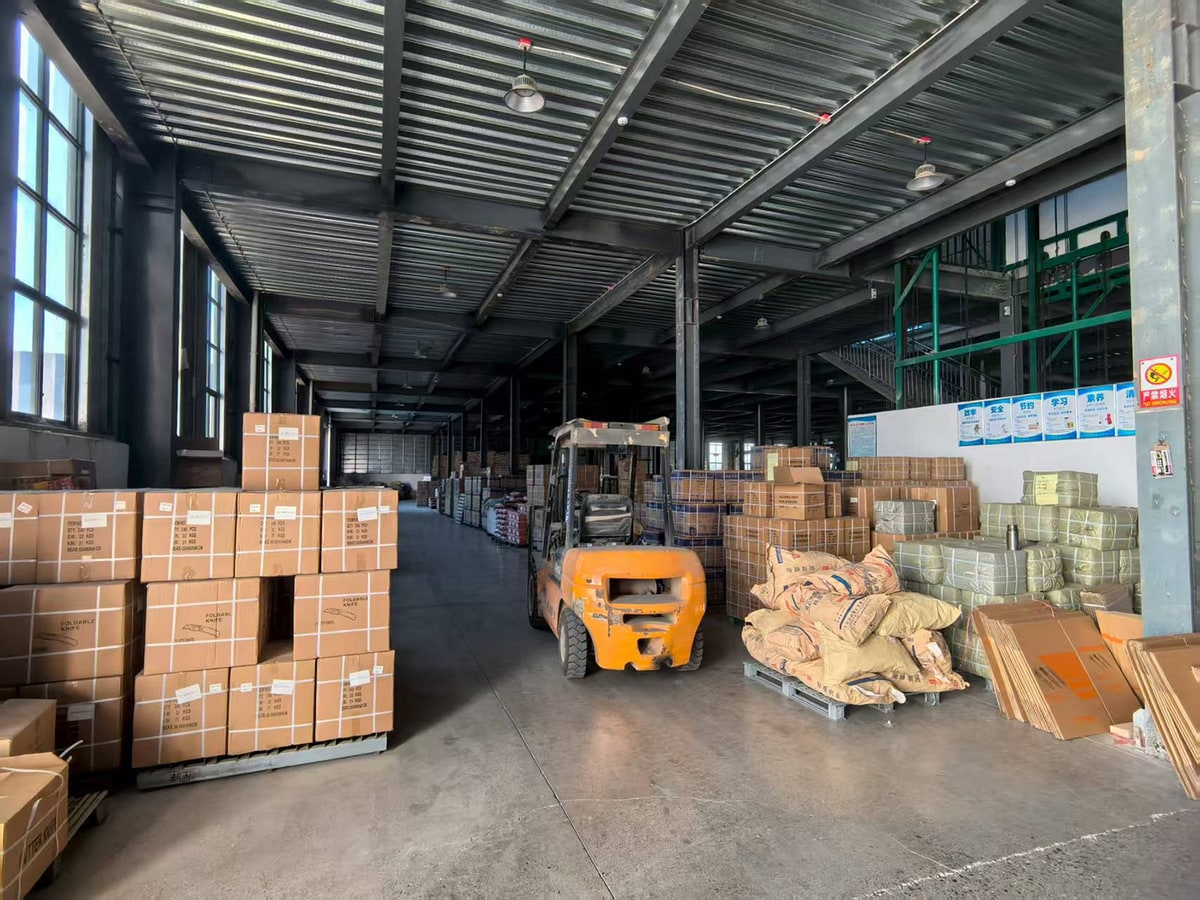
Packing and shipping areas should support carton handling, export preparation, and buyer-specific carton marks.
Buyers should confirm:
- Retail packaging style: color box, blister card, display box, hang card, or bulk pack
- Barcode label position and scannability
- Inner carton and master carton quantity
- Carton mark content and layout
- Product protection during transport
- Photo confirmation before shipment
For online sellers and retail buyers, packaging should be treated as part of the product, not a final decoration step.
5. Check certificates and test reports when needed
Not every hand tool order needs the same compliance documents. But if the buyer sells to retail chains, regulated markets, or private-label channels, certificates and test reports may be part of the purchasing file.
WOOKTOOL provides CE/RoHS certificate and RoHS test report examples on the factory page. Buyers can review these documents when preparing tape measure orders or compliance files.
For certificate review, ask:
- Which product is covered by the document?
- What is the report or certificate number?
- Which testing standard or directive is mentioned?
- Is the certificate relevant to the target market?
- Does the buyer need a full report, a certificate page, or updated testing for a new product?
When certificates are important, buyers should discuss them before order confirmation, not after the goods are ready.
6. Evaluate communication quality
Factory verification is also about communication. A good supplier should ask useful questions before quoting, especially for OEM/ODM products.
Strong supplier questions include:
- What is the target market?
- What quantity are you planning?
- Do you need WOOKTOOL branding or private label?
- Do you have a logo file?
- Which packaging style do you prefer?
- Do you need barcode, carton mark, or special warning text?
- Do you need samples before bulk production?
- What is your delivery schedule?
If a supplier only answers with a price but does not ask about specifications, packaging, quality, or target market, the buyer may receive an incomplete quotation.
Factory-checking RFQ list
Before contacting a hand tools factory, prepare:
- Product category and reference photo
- Target market and buyer channel
- Estimated quantity
- Custom logo, color, or packaging needs
- Quality-control requirements
- Certificate or test report requirements
- Target delivery schedule
- Photos or documents you want the supplier to provide
If you need to evaluate factory capability for tape measures, utility knives, screwdriver sets, or private-label hand tools, review the WOOKTOOL product catalog, compare OEM/ODM hand tools support, or send your factory inquiry and RFQ.
Sources
- World Bank, Manufacturing, value added (current US$) - China, 2024 value accessed from World Bank API.